I. Characteristics of Amethyst
Amethyst, etymologically derived from the Greek word "amethystos," meaning "that which protects from intoxication," is a stone that has stood the test of time, always shrouded in mystery and reverence. It combines a mesmerizing aesthetic with physical qualities that make it prized in the world of jewelry and beyond. Let's explore the distinctive physical characteristics of amethyst before delving into the depths of its violet hues.
A. Physical characteristics of Amethyst
Description of the Texture and Hardness of Amethyst:
Amethyst is a variety of quartz, which ranks it among the hardest and most durable minerals. It has a Mohs hardness of 7, a standard scale for measuring mineral hardness. This hardness allows amethyst to resist scratching, making it a popular choice for everyday jewelry such as rings and bracelets. Its texture is often smooth and vitreous, but it can also contain internal inclusions that create fascinating and unique patterns.
Mention of common crystalline forms:
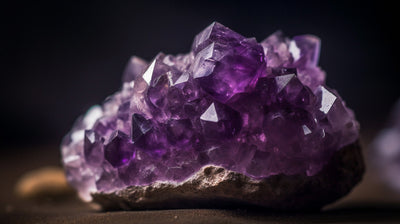
Amethyst crystals often develop in geodes, hollow rock structures where the crystals form inside volcanic or sedimentary cavities. These geodes can vary in size, from very small to gigantic. When you open a geode, you are greeted by a display of sharp amethyst crystals with violet hues.
Individual amethyst crystals often have a prismatic shape with six faces, ending in a pyramidal point. This hexagonal structure is characteristic of the quartz family.
B. The Colors of Amethyst
Explanation of the range of purple colors, from light lilac to dark purple:
Amethyst is best known for its captivating purple color, which can range from light lilac to deep violet, including reddish and bluish hues. This range of colors is due to the presence of iron impurities and the mineral's natural irradiation. Lighter shades, such as lilac, are often associated with a gentle and calming aura, while deep violet is seen as more regal and imposing.
Mention of Variations and what affects the Color:
The color of amethyst can vary depending on the amount of iron impurities present and the level of irradiation it has undergone. Furthermore, temperature and chemical changes can also influence amethyst's color. For example, heating amethyst to high temperatures can alter its color to yellow citrine or ametrine, a bicolor stone that blends purple and yellow tones.
The geographical origin of amethyst can also play a role in its coloration. For example, amethysts from Uruguay are known for their deep, dark purple color, while those from Brazil may display a lighter shade of purple.
The color of an amethyst can also be affected by inclusions and treatments. Mineral inclusions can create darker or lighter areas, adding complexity to each stone's color.
II. History and Origin of Amethyst
The richness of its color and its rarity have made amethyst a prized gemstone throughout history. The depth of its purple hue has long been associated with royalty, power, and the divine. Looking back through time, we discover that the appreciation of amethyst transcends cultures and eras.
A. History of Amethyst
Exploring the Historical Uses of Amethyst:
The earliest evidence of amethyst use dates back to antiquity. The Egyptians incorporated it into their jewelry and amulets, while the wealthy and powerful of the Roman Empire wore amethyst rings. According to legend, the purple color of amethyst symbolized sobriety, and amethyst cups were believed to prevent drunkenness.
In medieval societies, amethyst was widely used by the nobility and clergy. It was often set in royal jewelry and ecclesiastical insignia. Furthermore, it was renowned for its purported protective properties and its ability to promote mental clarity.
Mention of ancient civilizations that valued amethyst:
Ancient civilizations such as the Greeks, Romans, and even more distant civilizations like ancient Egypt, highly valued amethyst. These ancient cultures often believed in amethyst's protective and calming power. It was also a stone of choice for high-ranking officials and nobles in many different cultures, who used it in various artifacts, jewelry, and religious ornaments.
B. Origin of Amethyst
Discussion on the Geological Formation of Amethyst:
Amethyst is a variety of quartz, formed in the cavities of volcanic rocks. Its formation begins when these cavities fill with gas and silica-rich water. Over time, and under specific temperature and pressure conditions, these elements crystallize to form amethyst. Natural radiation, combined with the presence of trace amounts of iron, gives amethyst its characteristic purple color. The beauty of this stone lies in the millions of years of geological history it carries within it, a slow transformation from the simple to the divine.
List of the main amethyst deposits in the world:
Amethyst deposits are found in various regions around the globe, with notable concentrations in South America, Africa, and Europe.
Brazil is one of the world's largest producers of amethysts, offering a variety of hues ranging from lilac to deep purple. Uruguay is also known for its deep, richly colored amethysts.
Africa, with countries like Zambia and Madagascar, is also a key player in the supply of high-quality amethyst. African amethysts are often prized for their saturated and intense color.
Russia and South Korea also have notable deposits, each with unique characteristics in terms of color and quality.
Each of these deposits bears the imprint of local geological history, making each amethyst slightly different, but equally fascinating.
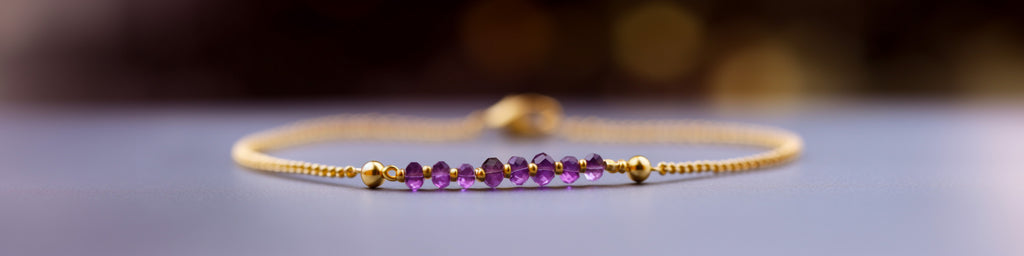
III. Symbolism, Virtues and Benefits of Amethyst
The amethyst stone transcends mere aesthetic pleasure, entering a realm of deeper meaning and holistic utility. Amethyst's rich purple color and its presence throughout history have woven a tapestry of symbolism and beliefs in its beneficial properties.
A. Symbolism of Amethyst
Exploring the Symbolism of Amethyst:
Amethyst is often seen as a bridge between the earthly and the divine. Its purple color, rare in nature, is traditionally associated with royalty, mysticism, and spirituality.It is often used to symbolize purity, devotion, and divine connection.
In Christianity, for example, amethyst is associated with chastity and piety, and it is often used in religious objects. In antiquity, amethyst was also associated with wine, its purple color reminiscent of wine and the belief that the stone could prevent drunkenness.
Mention of cultural and mythological associations:
Various cultures and mythologies have also forged associations with amethyst. In Greek mythology, the stone is linked to the legend of Dionysus, the god of wine, and a young virgin named Amethystos, who was turned to stone to protect her from Dionysus's wrath. In ancient Rome, amethyst was considered a remedy for drunkenness.
In Eastern cultures, amethyst is often associated with peace, tranquility, and emotional balance.
B. Virtues and Benefits of Amethyst
Description of the Beliefs Surrounding the Healing and Soothing Properties of Amethyst:
Many traditions believe in the healing properties of amethyst. It is often cited as a calming stone, capable of alleviating stress, anxiety, and insomnia. Holistic practitioners value amethyst for its ability to promote mental clarity and emotional calm, providing a space for reflection and meditation.
Amethyst is also renowned for its purported purifying properties, believed to be able to cleanse negative energy and promote physical and emotional healing.
Discussion on the Use of Amethyst in Lithotherapy:
Lithotherapy, a holistic approach that uses precious and semi-precious stones to promote health and well-being, places great importance on amethyst. It is often used to balance the third eye chakra, believed to be the center of wisdom and intuition.
Lithotherapy practitioners often use amethyst to help calm the mind, improve concentration, and aid in meditation. They also believe that amethyst can help with physical detoxification and addiction reduction, creating an environment conducive to recovery and healing.
The benefits attributed to amethyst extend beyond the physical to touch the spiritual and emotional, creating a space of peace and personal growth.
The rich layers of symbolism and virtues attributed to amethyst make it more than just a gemstone. It is a bridge to a space of deeper reflection, an instrument of healing, and a symbol of the pursuit of transcendence.

IV. How to associate and care for Amethyst
Amethyst, with its deep color and numerous properties, offers a vast canvas for creativity and can be combined with other gemstones. However, preserving its beauty and energetic qualities requires careful attention. Let's explore how to maximize the aesthetic appeal and longevity of this enigmatic stone.
A. How and which stones to pair with Amethyst
Suggestions for stones that pair well with Amethyst:
Aesthetically, amethyst pairs well with a variety of gemstones. Its deep purple hue contrasts beautifully with lighter or neutral stones such as rose quartz, citrine, or rock crystal.The combination of amethyst with rose quartz is often appreciated for its gentleness, creating a soothing harmony that can be very appealing.
On an energetic level, amethyst, known for promoting mental clarity and serenity, complements well with stones such as citrine, known for its energizing properties, or lapis lazuli, known for encouraging communication and self-expression.
Examples of jewelry combining amethyst with other stones:
Necklaces: A necklace where amethyst beads alternate with rose quartz or citrine beads can create a pleasing visual flow while combining the soothing and invigorating energies of these stones.
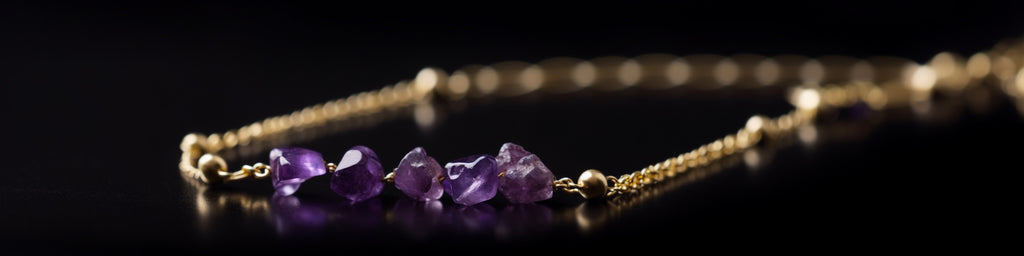
Bracelets: Bracelets mixing amethyst and lapis lazuli stones can not only be aesthetically pleasing, but also energetically powerful, encouraging both peace of mind and open communication.
Rings: A ring featuring a central amethyst flanked by small turquoise stones or pearls can present a striking contrast and an elegant look.
B. How to Cleanse and Recharge Amethyst
Instructions for safely cleaning Amethyst:
Amethyst is a relatively hard stone, but it can be scratched by harder materials or damaged by harsh chemicals. To clean amethyst, use warm water, mild soap, and a soft brush. Avoid ultrasonic cleaners and steam cleaners, as they can damage the stone.
After cleaning, carefully dry the amethyst with a soft cloth to avoid scratches. It is also recommended to store the amethyst separately from other jewelry to prevent scratches and damage.
Tips for recharging Amethyst:
Recharging amethyst often involves exposing the stone to natural light. However, prolonged exposure to sunlight can cause amethyst to fade, so it's best to recharge it under the soft light of the moon. Place the amethyst in the moonlight overnight, especially during a full moon, to revitalize its energies.
Some traditions also suggest burying amethyst in the earth for several hours for an energy recharge, or placing it on a geode or cluster of quartz to strengthen its energetic vibration.