I. Characteristics of Tourmaline
A. Physical Characteristics of Tourmaline
Tourmaline is a semi-precious stone distinguished by its diversity and unique physical attributes. These aspects make it not only aesthetically pleasing, but also fascinating from a geological perspective.
1. Description of the texture and hardness of tourmaline:
Tourmaline typically has a smooth, vitreous texture, with a luster ranging from transparent to translucent. Its hardness is rated between 7 and 7.5 on the Mohs scale, making it a relatively hard and scratch-resistant stone. This hardness makes it ideal for use in various types of jewelry, as it can withstand scratches and damage from everyday wear.
2. Mention of common crystalline forms:
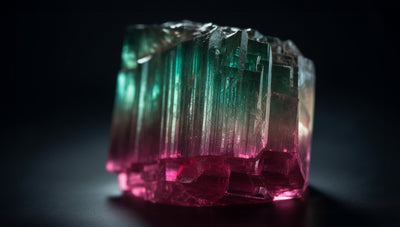
Tourmaline typically forms as long, narrow prismatic crystals with triangular or hexagonal faces. These crystals can sometimes be so long and thin that they are called "tourmaline pencils." Tourmaline crystals often have distinct vertical striations along their length, which adds to their appeal and uniqueness.
B. The Colors of Tourmaline
Tourmaline is often celebrated for its vast range of colors. It can be found in almost every imaginable color, making it exceptionally versatile in jewelry design.
1. Explanation of the color range, from black to pink, blue, green, brown and multicolor:
-
Black: Black tourmaline, also known as schorl, is one of the most common varieties of tourmaline.
-
Pink: Pink tourmaline has delicate hues and is often associated with feminine and soothing energies.
-
Blue: Blue tourmaline, or indicolite, varies from light blue to dark blue, often evoking images of deep seas.
-
Green: Green tourmaline, also called verdelite, can vary from pale green to dark green, sometimes rivaling emerald in terms of beauty.
-
Brown: Brown tourmaline is earthy and warm, offering a feeling of stability and grounding.
-
Multicolored: Some tourmalines display multiple colours in a single crystal, such as the watermelon tourmaline which is pink in the centre and green on the outside.
2. Mention of variations and what affects the color:
The color of tourmaline is greatly affected by the chemical elements present during its formation. For example, iron and titanium can produce black tourmaline, while manganese can produce pink tourmaline. The presence of these trace elements in varying amounts and combinations allows tourmaline to exhibit such a wide range of colors.
Furthermore, the perceived color can also be influenced by the size and orientation of the crystal. In some cases, a tourmaline can display different colors depending on the angle from which it is viewed, a phenomenon known as dichroism.
Tourmaline is truly a captivating stone that attracts gem enthusiasts with its beauty, diversity, and unique charm. Its wide range of colors and respectable hardness make it a popular choice for a variety of jewelry, offering a wealth of options to suit all tastes and styles.The physical characteristics of tourmaline, combined with its captivating color palette, continue to fascinate the imagination of jewelry designers and gemstone collectors.

II. History and Origin of Tourmaline
A. History of Tourmaline
Tourmaline, with its diverse colors and unique luster, has been a prized stone throughout the ages. Its history is rich and spans many civilizations.
1. Exploration of the historical use of tourmaline:
Tourmaline has been used in various cultures as a precious stone adorning royal jewelry, crowns, and works of art. Examples of its use abound in historical records.
-
Royal Jewels: Tourmaline has been favored by many monarchs throughout history for its magnificent colors. Jewelry adorned with tourmaline was considered a symbol of power and wealth. It was often set in royal crowns, necklaces, and brooches.
-
Art Objects: Craftsmen have been fascinated by tourmaline and have used it in the creation of sculptures and other art objects. Its ability to be carved into thin strips or intricate shapes has allowed for the creation of exquisite works of art.
2. Mention of ancient civilizations that valued tourmaline:
Ancient civilizations such as those of Egypt, ancient Rome, and regions of ancient Asia were known to value tourmaline. They often believed the stone possessed protective properties and spiritual benefits.
-
Ancient Egypt: The ancient Egyptians believed that tourmaline, on its journey from the center of the Earth, passed over a rainbow and acquired all the colors of the spectrum.
-
Ancient Asia: Tourmaline was highly valued in ancient Chinese culture and was often used in sculptures and jewelry. Furthermore, some empires in South and Southeast Asia also prized tourmaline for its many colors.
B. Origin of Tourmaline
Tourmaline is a geologically complex stone, formed from deep mineralogical processes beneath the Earth's surface.
1. Discussion on the geological formation of tourmaline:
Tourmaline forms in veins of igneous and metamorphic rocks, where mineral-rich hydrothermal fluids interact with the surrounding rocks. The process of tourmaline formation is complex, involving the crystallization of these fluids under specific pressure and temperature conditions. The various chemical elements present during tourmaline formation contribute to its wide range of colors.
2. List of the main tourmaline deposits in the world:
Tourmaline is mined in various locations around the globe, with each site producing stones with unique characteristics.
-
Brazil: Brazil is a major mining site for tourmaline, known for producing stones of all colours, including the rare Paraíba tourmaline which is renowned for its electric blue-green colour.
-
Africa: Africa is another important source of tourmaline, with mines in Tanzania, Nigeria, and Madagascar producing quality stones.
-
Afghanistan and Pakistan: These regions are known to produce tourmaline in vibrant colors and are important sources of pink and green tourmaline.
-
UNITED STATES: California and Maine also have tourmaline deposits, with distinctive colours unique to those regions.
Tourmaline continues to be a fascinating gemstone, both for its rich history and its complex geological origin. Tourmaline deposits around the world attest to its global presence and appreciation across cultures and eras. Each tourmaline deposit carries with it a unique piece of Earth's geological history, captured in the beautiful variety of colors and forms this gemstone offers.

III. Symbolism, Virtues and Benefits of Tourmaline
A. Symbolism of Tourmaline
Tourmaline is a stone that holds a rich tapestry of symbolism, drawn from different cultures throughout history.
1. Exploring the symbolism of tourmaline:
-
Protection: Tourmaline is often considered a protective stone in many cultures. It is believed to create an energetic shield around the wearer, repelling negative energies, curses, and threats.
-
Energy: Tourmaline's electrostatic qualities make it a symbol of energy and vitality. It is often associated with the activation and balancing of the chakras, thus allowing for a smooth flow of energy throughout the body.
2. Mention of cultural and mythological associations:
-
Cultural associations: Various cultures associate tourmaline with spiritual and earthly forces. For example, in some traditions, it is considered a stone capable of uniting heaven and earth, symbolizing the union of divine and earthly energy.
-
Mythology: There are also legends and myths surrounding tourmaline, including one where it travels from the center of the Earth through a rainbow, thus acquiring its multiple colors.
B. Virtues and Benefits of Tourmaline
Tourmaline is often shrouded in mystical beliefs regarding its healing and soothing abilities, although these claims are not supported by modern science.
1. Description of beliefs surrounding the healing and soothing properties of tourmaline:
-
Healing properties: Tourmaline is often associated with healing properties, with claims that it can help balance the body's energies, soothe anxiety, and improve mood. Some also claim it can help overcome addictions and improve digestion.
-
Calming: Tourmaline's calming nature is also praised; many believe it can help soothe the mind, thus promoting clarity, concentration, and deep meditation.
2. Discussion on the use of tourmaline in crystal healing:
-
Chakra balancing: In crystal healing, tourmaline is often used to work on the chakras, particularly the root chakra. It is believed to help balance energies and promote a harmonious energy flow through the chakras.
-
Energy protection: Tourmaline is also used for energy protection in crystal healing. It is believed to help cleanse and transform dense energy into a lighter vibration.
-
Emotional support: Tourmaline is also reputed to offer emotional support, helping to balance emotions, overcome stress and anxiety, and promote a sense of tranquility.
Tourmaline, with its many colors and profound symbolism, holds a special place in the world of gemstones. Its symbolism of protection and energy, along with the beliefs surrounding its healing and calming properties, continues to attract many followers worldwide. In crystal healing, tourmaline is a stone of choice for those seeking to balance their energies and find a sense of peace and protection on their spiritual journey. Although modern science does not support these claims, tourmaline's mystical appeal and perceived benefits continue to make it a popular and cherished gemstone.

IV. How to Combine and Care for Tourmaline
A. How and Which Stones to Combine with Tourmaline
Tourmaline is a versatile stone that blends well with many other precious and semi-precious stones, both aesthetically and energetically.
1. Suggestions for stones that pair well with tourmaline:
-
From an aesthetic point of view:
- Quartz: Light quartz or rose quartz combined with black or multicolored tourmaline creates an aesthetically pleasing contrast.
- Opal: Opal, with its unique play of colors, can add an extra dimension to tourmaline, especially when paired with multicolored tourmaline.
-
In terms of energy:
- Amethyst: The combination of amethyst and tourmaline is often used for chakra work and meditation, as they are believed to help with energy balance.
- Rock crystal: It is often associated with tourmaline to amplify energy, mental clarity, and protection.
2. Examples of jewelry combining tourmaline with other stones:
- Necklaces: A necklace with alternating tourmaline and amethyst beads can be both beautiful and energetically powerful.
- Bracelets: Bracelets combining tourmaline beads with quartz or lapis lazuli beads can be very attractive.
- Rings: A ring with a central tourmaline framed by diamonds or small rock crystals can be a very elegant statement piece.
B. How to Clean and Recharge Tourmaline
Like all gemstones, tourmaline requires regular care to maintain its beauty and energy. Here are a few tips:
1. Instructions on the safe cleaning of tourmaline:
-
Physical Cleansing: Use a soft brush and lukewarm water with a little mild soap to clean the tourmaline. Gently wipe it dry with a soft cloth.
-
Energy Cleansing: To eliminate any accumulated negative energy, place the tourmaline in a bowl of sea salt for a few hours.Make sure to rinse the stone with clean water to remove the salt before drying it.
2. Tips for recharging tourmaline:
-
Sunlight or moonlight: Exposing tourmaline to natural sunlight or moonlight can help recharge its energies. However, direct sunlight can alter the color of some tourmalines, so moonlight is preferable.
-
Earth: Burying tourmaline in the earth overnight is also a popular method for recharging the stone and connecting it to earthly energies.
-
On a Quartz Crystal: Placing tourmaline on a large, clear quartz crystal for a few hours can also help to recharge and purify the energy of the tourmaline.
The judicious combination of tourmaline with other gemstones can not only create aesthetically pleasing jewelry but also enhance the wearer's energetic experience. Regular care, including cleansing and recharging, is crucial to maintaining the beauty and energy of tourmaline, making it a lasting and energetically beneficial companion.